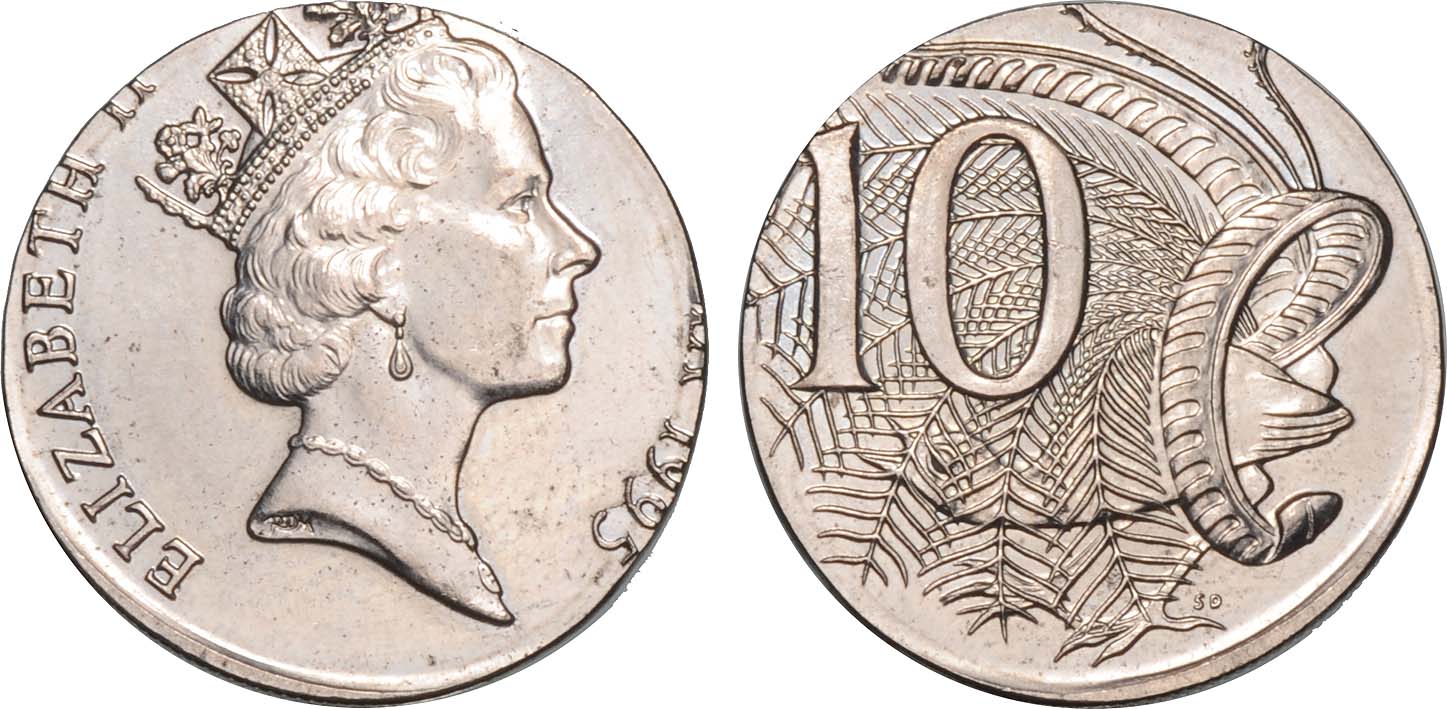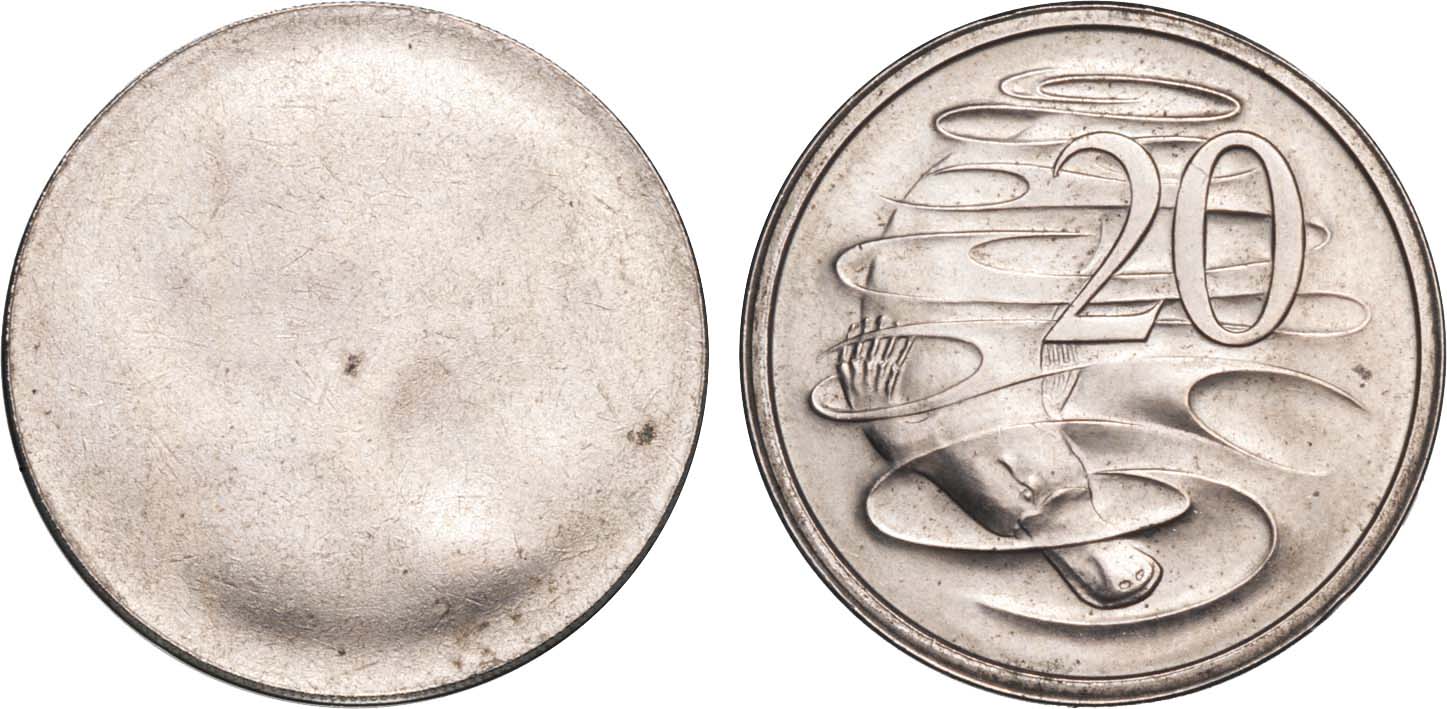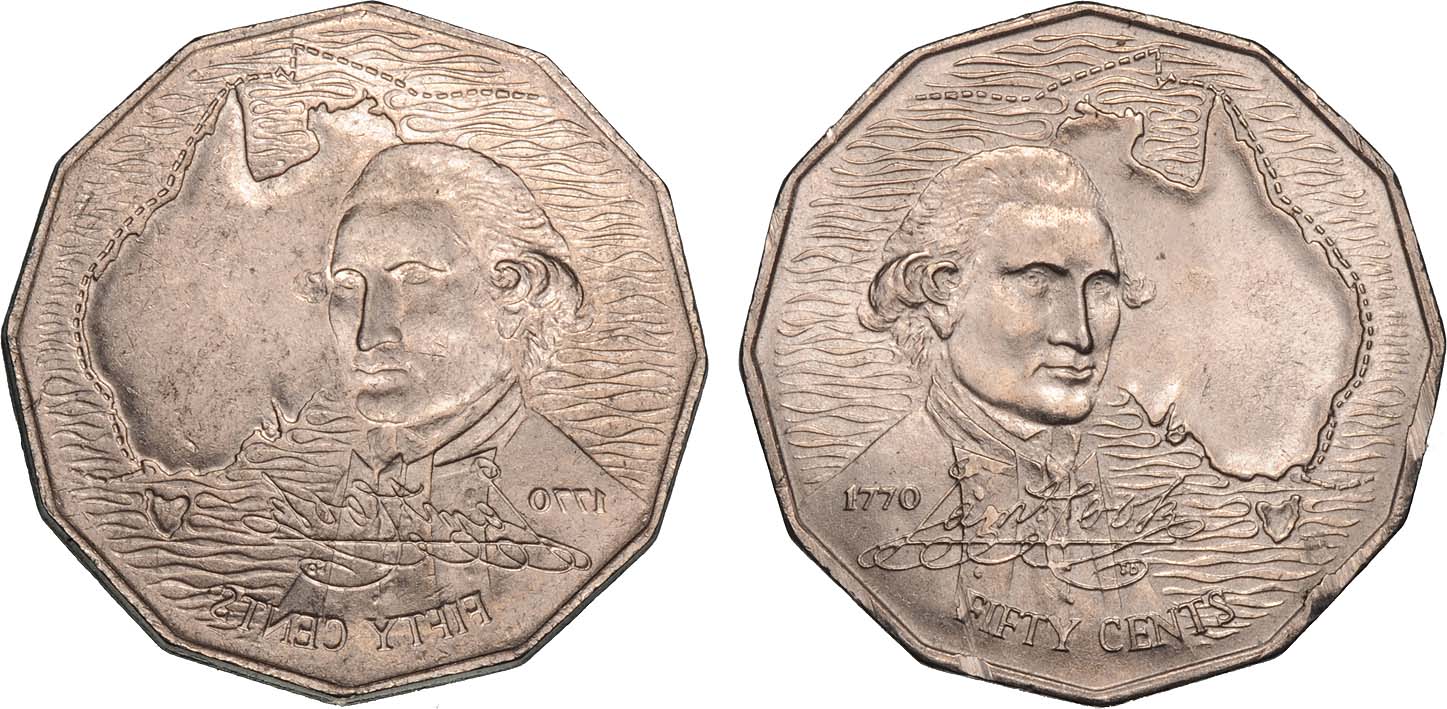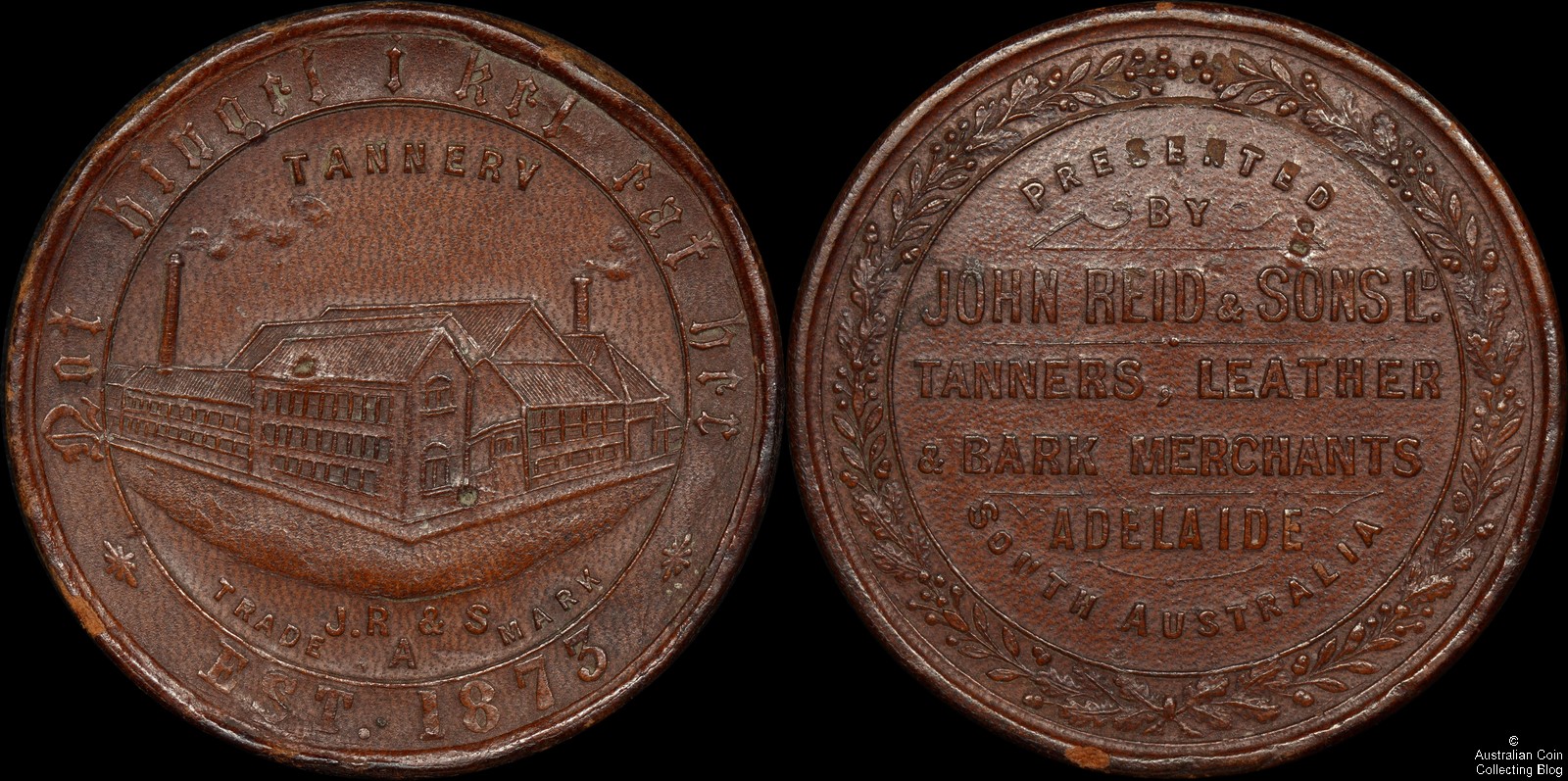
Coins Struck on Foreign Objects

The United States Mint has produced one of the most spectacular error coins that is available to collectors of US error coins. A dime (valued at 10 cents) was struck on a zinc coated nail either by sheer accidental contamination of the barrel of coin blanks or by Mint staff having placed it in the press for a laugh. Well a laugh we’ve had! This is one of the most impressive error coins we’ve seen and it’s for sale as well! The “coin” has been graded by PCGS as MS65 and is currently being sold by Heritage Auctions in the US. The bidding is currently sitting at $6,000USD and we expect this to rise before the hammer falls and this coin goes to a new home and is tucked away by the astute buyer.

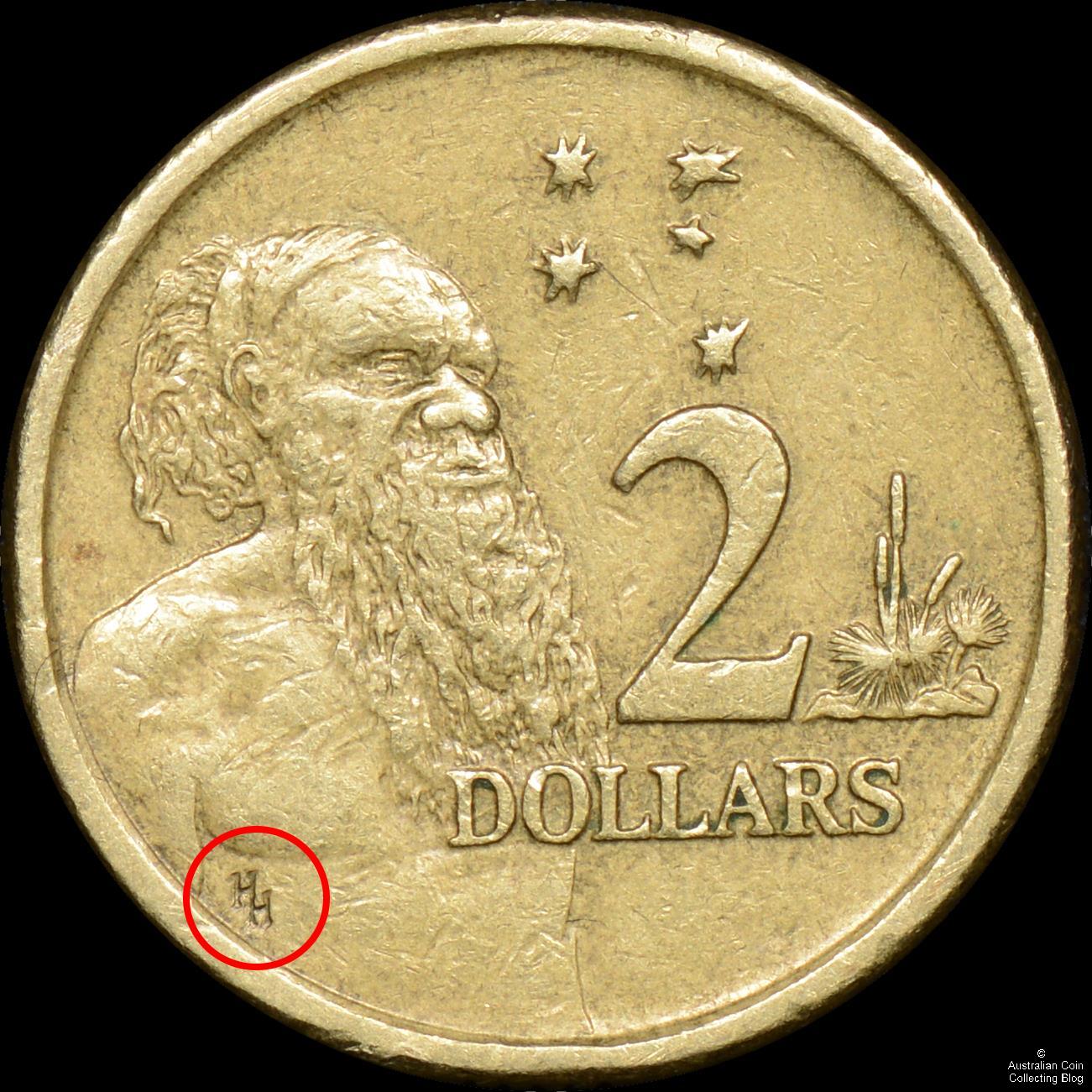
Fred Weinberg is a leading expert in the US error coin market and has seen many rare error coins. Australian coins struck on foreign objects are truly rare (perhaps this $2 is struck on a washer) but have been seen in the RAM’s own collection of extreme error coins. Their error coin display, “One in a Million” showed the public some of the more interesting rare and valuable coin errors such as this proof platypus 20 cent struck on a bolt:

Australian 20 cent Struck on a Bolt

Australian 20 cent Struck on a Bolt

The One in a Million display also showed us what can happen when the press malfunctions such as this 5 cent struck on the index plate that feeds each blank in the coin collar for it to be struck. Or further below a $5 coin struck on a feeder finger.

5 Cent Struck on an Index Plate

5 Cent Struck on an Index Plate

$5 Struck on Feeder Finger

$5 Struck on Feeder Finger

Posted in Error Coins

What is the 1934-35 Centenary Florin Coin Worth?

1934-35 Melbourne Centenary Florin

1934-35 Melbourne Centenary Florin

A 1934-35 Centenary Florin can be seen above, one of four commemorative Australian florins issued from 1910 to 1963. The coin itself celebrates two events, the centenary of the founding of the State of Victoria (in 1834) and the centenary of the founding of the city of Melbourne in 1835. Initially at least it was distributed by the Melbourne Centenary Committee as a collector coin for 3/-, one full shilling above face value. If you want to read more about the origins of the Centenary florin, how it was distributed, and why the final mintage was 53,405 and not 75,000 then then you’ll want to read this article.

On to what is the 1934-35 Centenary Florin is worth. It’s the most expensive commemorative florin to add to a collection, and in lower grades (VF and under) one of the most expensive florins in the entire florin series, second only to the key-date 1932 florin. Funnily enough, in uncirculated or better grades it is much less expensive comparatively when compared to many other florins, especially those of George V with the standard Coat of Arms reverse.

What is a Circulated Centenary Florin Worth?

Despite the Centenary Florin being a “collector” issue they certainly did circulate and it’s common to see them in Almost Uncirculated or Extremely Fine condition, however, it’s unusual to see them in grades lower than that. Even in Very Fine condition (about the worst grade you’d see one in) a Centenary florin is still worth $250 or so. In EF and AU grades you’d be looking at anywhere between $275 and $400 for a decent example. So, if you do happen to find a circulated florin of this type in a bulk lot (highly unlikely), or in an inherited coin collection (still fairly unlikely) then you’ve got a coin valued in the low hundreds of dollars. Even damaged they can be worth something, we’ve seen a circulated Centenary Florin with a hole drilled in it sell for $100!

Don’t forget that this coin is 92.5% silver and weighs 11.3 grams. This makes the bullion value AUD $29.28 (price updated daily) but you’d have to be pretty desperate to accept silver value for a Centenary Florin. We certainly would not ever advise doing it!

1934-35 Centennial Florin PCGS MS63

1934-35 Centennial Florin PCGS MS63

What is an Uncirculated Centenary Florin Worth?

Like the other three commemorative florins the Centenary was hoarded by the public and it’s not hard to find them in uncirculated condition. You’d typically see uncirculated to choice uncirculated Centenary Florins that are not graded by a reputable third party (like PCGS) for sale in dealers books for anything from $500 to $1000. Of course those same dealers won’t offer anything near that amount when buying a nice UNC florin nor will you see the same prices on eBay when selling them. Expect to be able to sell a raw UNC Centenary for $400-$600, perhaps less if eBay is being miserable or your chosen coin dealer is having a bad day.

If you are looking at coins graded by PCGS then the values are about $500 for a PCGS MS63 (seen above), $700 for a PCGS MS64, $1000 for a PCGS MS65 (see below), and $2500 for a PCGS MS66. Those are purchase prices, of course if you were selling you’d expect to get less from a dealer but you might get close to those prices selling online if you are patient.

Centenary Florin PCGS MS65

Centenary Florin PCGS MS65

What’s the Current Catalogue Value of 1934-35 Centenary Florins?

The 2015 edition of Pocket Guide to Australian Coin and Banknotes values the 1934-35 Centenary Florin at $185 in Fine, $225 in Very Fine, $325 in EF, and $400 in AU. Uncirculated is $525, $725 for Choice UNC, and finally $1500 in Gem. We’d say that these values are right on the money up until GEM, at which point the real retail price drops off to about $1000 or so for a PCGS graded MS65. Note of course that these values are BUY prices, and if you’re selling a coin to a dealer you’re always going to get less.

Disclaimer

Values contained in this article were current at time of writing (December 2015) and are provided as estimates only. The exact value of any coin is only known when you actually sell it. We also haven’t touched on the so called “proof-like” and “pattern specimen” Centenary Florins. There’s still some conjecture as if those are actually a thing and not the figment of certain numismatist’s imaginations. Personally we have no particular opinion on the topic one way or the other so we’ve stayed out of the debate.

Posted in Collecting Coins, Investing in Coins

What Happened To All The Pre-Decimal Coins When Australia Changed To Decimal Currency?

Pre-Decimal Silver Coins Hoarded by Collectors

Pre-Decimal Silver Coins Hoarded by Collectors

In 1966 Australia changed from the pre-decimal system to the decimal system, which obviously necessitated the production of hundreds of millions of shiny new decimal coins. What is less obvious, and not often thought about is whatever happened to millions and millions of circulated pre-decimal coins when Australia said good-bye to them in 1966? Where did those dull worn shillings go and how did they become bright shiny 10 cent coins after C-Day? Instead of finding silver florins in change the public found lustrous platypus 20 cent pieces with a new portrait of the Queen. Where did they go, the bronze halfpennies and pennies, the silver threepences, sixpences, shillings and florins?

It was the job of the Reserve Bank to withdraw pre-decimal coins from circulation but then it was up to the Royal Australian Mint to handle disposal of the coins. The halfpenny and penny were easy because the alloy was the same as that needed to produce one and two cent pieces. Later the bronze was also used in the production of overseas coins. The old coins were purchased by the Royal Australian Mint from the Reserve Bank at face value and turned into the new bronze 1 cent and 2 cent coins. Because of the sheer quantity of coins needed for the changeover it was also required to purchase coin blanks and raw metals to manufacture the 1 and 2 cent coins. Some bronze pre-decimal coins were added to the copper-nickel melt to help provide the copper content for the manufacture of the 5 cent, 10 cent and 20 cent. Care had to be taken in regulating the alloy composition during this process.

Pre-decimal coins in larger denominations contained silver, post 1946 coins were 50% silver and pre-1946 92.5% silver. Most coins in circulation around that time were “post” silver (post 1946) and contained 50% silver. The florins, shillings and sixpences were collected and sold to overseas companies (by tender) for refining at the prevailing world metal prices. Successful tenderers were Johnson Matthey (Bankers) Ltd, London and Deutsche Gold-Und Silber-Scheideanstalt Vormals Roessler, Frankfurt. The Perth Branch of the Royal Mint was tasked to refine withdrawn threepences. As payment the Perth branch of the Royal Mint kept the refined copper and returned the refined silver to Treasury. As of June 30th 1968 the Perth branch of the Royal Mint had refined $5 million worth of threepences producing around 4 million ounces of fine silver.

The penny, halfpenny and threepence were very quickly removed from circulation during the changeover so the Mint could build up a stockpile of one and two cent pieces that were distributed quickly to help ensure a smooth transition. Over the following two years the silver sixpences, shillings and florins were phased out after a dual currency period. A Proclamation fixed an enforceable date of August 1st 1967 as the date for all legal documents to be expressed in dollars and cents. The decimal system was the sole legal currency in Australia from that date. However, trading with the old money continued to occur after this date as the old coins continued to surface and be spent. In December 1969 the Mint had ceased bulk sorting of coins to remove pre-decimal currency as it had become unprofitable and the Decimal Currency Board submitted it’s final report and wound up on June 3rd 1969.

Today you can still find the odd pre-decimal coin in bulk lots of decimal coins or your change. Even the first 50 cent piece which was round is still spent on occasion for 50c despite it being widely (but not widely enough apparently) that the silver value far exceeds face value. Many old coins were kept as mementos of the old time and a lot of coins have been kept by collectors.

Posted in Australian Decimal Changeover

Roxbury Auction #95 Error Coin Highlights

Roxbury Auction House held their auction #95 (find the catalogue here) on October 17 2015 and there were a few errors in the sale that are worth mentioning. All prices are net of commission so 20% should be added to all prices to get the final cost of the item.

Lot 644 – 10 x blanks $2 size – this lot realised just $50, surely a bargain for blanks that are worth $30 or more EACH.
Lot 645 – 1926 penny with lip – This looks like a ramstrike error which are exceptionally scarce on George V coins. It realised $300 on a $100 estimate so bidders understood how unusual it was.
Lot 647 – 1945 penny brockage – This coin is described incorrectly and is in fact a flip-over double strike, which is probably more unusual than a pre-decimal penny brockage. This was bid up to $440 on an estimate of $300 which seems to be decent value. The coin appears to have a few issues with carbon which probably held it back from a bigger number.
Lot 648 – 1988 $2 with major bitten flan – this one snuck under the radar and fetched just $80 on a $90 estimate. Seems a bargain considering the clipped planchet in the image below sold recently for just over $500 in a private sale. The coin below is a better grade and a larger clip and thus has a higher value than the coin in the auction. But never fear dear reader if you want the 1988 clipped dollar that was sold in the auction an enterprising individual has it up for sale right now on eBay for $500.

$2 Large Clipped Planchet Error - Unknown Year

$2 Large Clipped Planchet Error – Unknown Year

Posted in Error Coins

National Trust 1970 Captain Cook Medal

1970 Captain Cook Medal

1970 Captain Cook Medal

The National Trust 1970 Captain Cook Medallion commemorates the bicentenary of Captain Cook’s journey navigating the east coast of Australia in 1770 and pays tribute to Cook’s great navigation ability. It was produced for the National Trust of Australia (Victoria) and it was hoped to be the first in a series of medallions commemorating notable Australasian historic occasions. We don’t believe however, that there were any subsequent issues.

It was originally issued in sterling silver for $30 and copper for $5-6 each. The design is by well known Australian designer Andor Meszaros and could well be his last design before his sudden passing in May 1972. The medallion was struck by Stokes (Australasia) Ltd.

The obverse  reads “James Cook 1770 1970” along with “ANDOR Meszaros” and “Stokes Melb”. The profile of Cook is based on a plaque by famous potter Josiah Wedgwood and is symbolic of his leadership. Stokes has given his features a ruggedness as Cook orders the helmsman in the background. The ship’s wheel is the second focal point of the design. The reverse is an exact replica of a compass card and a navigation instrument of the Cook period, superimposed on the top is the National Trust’s emblem, a heraldic protective bird. Andor also designed the Trust’s emblem some years prior. The reverse legend reads “NATIONAL TRUST OF AUSTRALIA VICTORIA”.

At 52 millimeters or 2 inches in diameter 3,000 pieces were struck in copper and 300 in silver with Carlisle reference c1970/32. This example struck in copper housed in black textured box with blue velour lining. Inside the lid is printed “STOKES (A’ASIA) LTD. Melbourne, Australia Estb. 1856″

Posted in Medals

1964y Halfpenny Late State Brockage Error

QEII Error Halfpenny 1953-1964

QEII Error Halfpenny 1953-1964

We came across this halfpenny error coin and though we’d share the fascinating process of determining more about this coin. At first glance it looks like a Queen Elizabeth pre-decimal coin around the halfpenny size. Weighing in at 5.49g it’s very slightly under the required 5.67g for a halfpenny but still within acceptable tolerance. The coin bears the Mary Gillick portrait of Queen Elizabeth II and the reverse design is pretty much entirely missing apart from a little ghosting of design. The Mary Gillick portrait and Elizabeth II’s reign dates the coin from 1953 when she became Queen to 1964 when the last Australian halfpenny was minted.

The two letters in the legend after REGINA, “F:D” which is short for fidei defensor translates to defender of the faith. It is seen on the obverse which was reintroduced on the halfpenny in 1959 after being removed for the new portrait in 1953. This dates the coin somewhere between 1959 to 1964.

The seemingly insignificant die crack around 3 o’clock between the lettering and the rim beads holds the major key in identifying the exact year that this coin was minted. I had an inkling I had seen this before so I went searching my halfpenny collection!

Among my collection was a 1964y with a hint of the same die crack, then another with a more prominent crack. With more checking I became aware of the cud this extensive die crack produced when the die eventually failed. The die crack became more and more pronounced as it wore out striking more coins.

Error coin (left), 1964y Halfpennies (right)

Error coin (left), 1964y Halfpennies (right)

Further to the error coin in question it would be very easy to identify the die cap that produced this late state brockage error as these particular halfpennies also show more evidence of an overused die on the reverse. Another die crack that is always found on these coins is the straight crack through the last A of Australia and the ears of the roo, from the kangaroo to the rim. The later example with the heavier cracking also exhibits another crack through the 19 of the date and through the F of HALF to the rim. The die cap would likely exhibit both these die cracks. Is it out there in someone’s collection or was it prised off the die by a Mint worker and discarded for destruction?

1964y Halfpenny PCGS MS64RB early die crack

1964y Halfpenny PCGS MS64RB early die crack

1964y Halfpenny Prominent Die Cracks

1964y Halfpenny Prominent Die Cracks (image thanks to a friend of the Blog)

Posted in Error Coins

Using the Images on This Site

Unless otherwise stated the copyright for images used on this site is owned by the Australian Coin Collecting Blog. You are not allowed to use or reproduce them in any form for any reason without our permission. We’ve spent a lot of time and money learning how to take great coin images and you’re just not allowed to take credit for our hard work. This site is our hobby and we make minimal income from it and nothing is guaranteed to annoy us more than someone selling something on eBay and using one of our images, or using our images to drum up publicity for your own coin business. In those cases using our images is absolutely not allowed and constitutes a breach of copyright.

That all sounds scary but getting permission to use our images is usually just a matter of emailing us and asking nicely. In the majority of cases we just like to be credited as the source of the image. If you’re using an image online then we need to have a link back to this website. If you’re wondering if we ever give permission to use our images the answer is a great big yes. Ian McConnelly used our images extensively in his book Renniks Australian Pre-Decimal & Decimal Coin Errors 1st Edition, our images have appeared in several British numismatic journal articles, and members of several Australian numismatic societies have used our images in presentations and journal articles. And all they did was ask! There was no charge involved, and in several cases we went out of our way to re-take images that were not up to scratch!

It’s as simple as that. Do not use our images without asking first.

Posted in Coin News, Numismatic Photography

Collecting a ‘Type’ Set of Coins

One of the beauties of coin collecting is that there are no hard and fast rules that determine what you should and shouldn’t collect. One way of collecting coins is collecting a ‘type’ set of coins. A type set of coins comprises an exemplary type of each coin from a series of coins. What exactly makes up a type set is open to a great deal of debate, but as I mentioned, it’s your collection so you can define it.

Australian 1952 Threepence

Australian 1952 Threepence

I thought it would be worthwhile examining a series of coins to determine (loosely) what a type set for this series would comprise. I’ve decided to focus on the Australian Threepence, because it’s a short set and not open to much debate. The Australian 3d was minted from 1910 to 1964 spanning the reign of 4 different monarchs. Edward VII had coins minted in 1910 only, George V from 1911 to 1936, George VI from 1938 to 1952, and Elizabeth II from 1953 to 1964. Of these monarchs George VI and Elizabeth II threepence were minted with two obverses. So it is (on the surface at least) very easy to define the ‘type’ set for the Australian 3d.

1. Edward VII 3d (1910 only)
2. George V 3d (1911-1936)
3. George VI Obverse 1 (1938 to 1948)
4. George VI Obverse 2 (1949 to 1952)
5. Elizabeth II Obverse 1 (1953 to 1954)
6. Elizabeth II Obverse 2 (1955 to 1964)

There we have it, 6 coins and you have an Australian 3d type set! Right? Well, perhaps. What if we were to take into account mint marks? From 1942 to 1944 some Australian 3d’s were minted in the USA with a D (Denver) or S (San Francisco) mint mark on the reverse of the coin. In addition, in 1951 some 3d’s were minted in London, again with a mint mark on the reverse (this time a PL). So now, our type set is expanded by a further three coins.

7. George VI ‘D’ mintmark (1942 or 1943)
8. George VI ‘S’ mintmark (1942 to 1944)
9. George VI ‘PL’ mintmark (1951)

Australian 1956 Threepence

Australian 1956 Threepence

OK, finally, we’re done! Well, again, perhaps we are and perhaps we are not. This is where things get really murky. What if we were to include major varieties into the mix? The Aussie threepence has two of these, the 1922/1 overdate and the 1934/3 overdate. These two overdates are certainly in most of the dansco type folders for this series, so they could indeed be considered part of the type set. But this is where the decision lays with you, the collector. You may decide to ignore these two major varieties from your type set and concentrate on the first nine coins I’ve mentioned. The main reason? Cost! The 1922/1 overdate 3d in just fine condition can cost as much as acquiring a choice or gem coin of each of the first nine coins I have mentioned.

Truly the path forward is up to you, when collecting a type set. I’d suggest thinking about the following before setting on the path of type collecting.

  • Define the type set you want to collect before you start. Research the series and costs of the coins you would like. It is better to know now that a set is likely to be out of reach because of cost or scarcity. Nothing kills interest quicker than lack of progress.
  • Define you budget and grade of coins you want to collect. You might go for a matched grade set (say VF) or a premium set (Choice or better).
  • Certain sets may give you an option in terms of strike. For example, you could easily collect post 1966 decimal coins in proof finish without having a huge outlay.
  • Don’t be restricted by what makes a ‘type’ set. You may like to collect the best grade coins issued from a certain country for a certain year. You may look for type coins with images that fit a theme that interests you (animals and military themes are popular).
  • Remember, this is supposed to be fun. If it stops being fun examine what you are doing and either revise your goals or move onto something else.
Posted in Collecting Coins

Collecting the Dollar Coin From 1984 to 2015

Collecting the Australian dollar coin used to be a well loved pastime but in recent years the scale of collecting these has become such a chore that it’s no longer enjoyable -for this collector at least. Thirty years of the dollar coin has gone by and we thought we’d round up a bit of a summary about the beloved dollar issued by the Royal Australian Mint.

If you browse your change and keep commemorative dollar coins as you find them and keep an example of the standard design mob of roos each year it was issued into circulation you would find that equates to a collection of 35 coins (up until end 2015).

If you keep a more comprehensive collection of every 25 millimeter dollar coin including those NCLT or non-circulating legal tender coins with all their different reverses then you would have as many as 193 coins in your collection (accurate until end of 2015). And we’re not even talking about any other legal tender of one dollar that doesn’t fit into the 25 millimeter category issued by either the Royal Australian Mint or the Perth Mint (many of which are 40mm and are not spoken about here).

See the graph below showing how the number of one dollar reverses issued has increased over the years since the first coin in 1984.

Now our magic number of 193 dollar coin reverses doesn’t include added mintmarks, privymarks, counterstamps AND it doesn’t include different packaging types or the different metals these reverse designs have been issued in. For example the same reverse designs were issued with counterstamps at various portable press locations throughout the year, the same coin might have been issued in a card and a PNC and the same reverse design might have been struck in fine silver as another issue. If we were to add these onto the list the number would increase exponentially.

Just looking at the statistics for 2015 in our magical table we see there are 92 different dollars and packaging to collect with an issue price of $17,822. This of course includes buying the expensive gold set and buying 26 different baby proof sets for each alphabet dollar they contain. If you’re not that “into it” and do just want an example of every dollar issued along with every mintmark, counterstamp or privymark then you will have to obtain 52 coins in 2015.

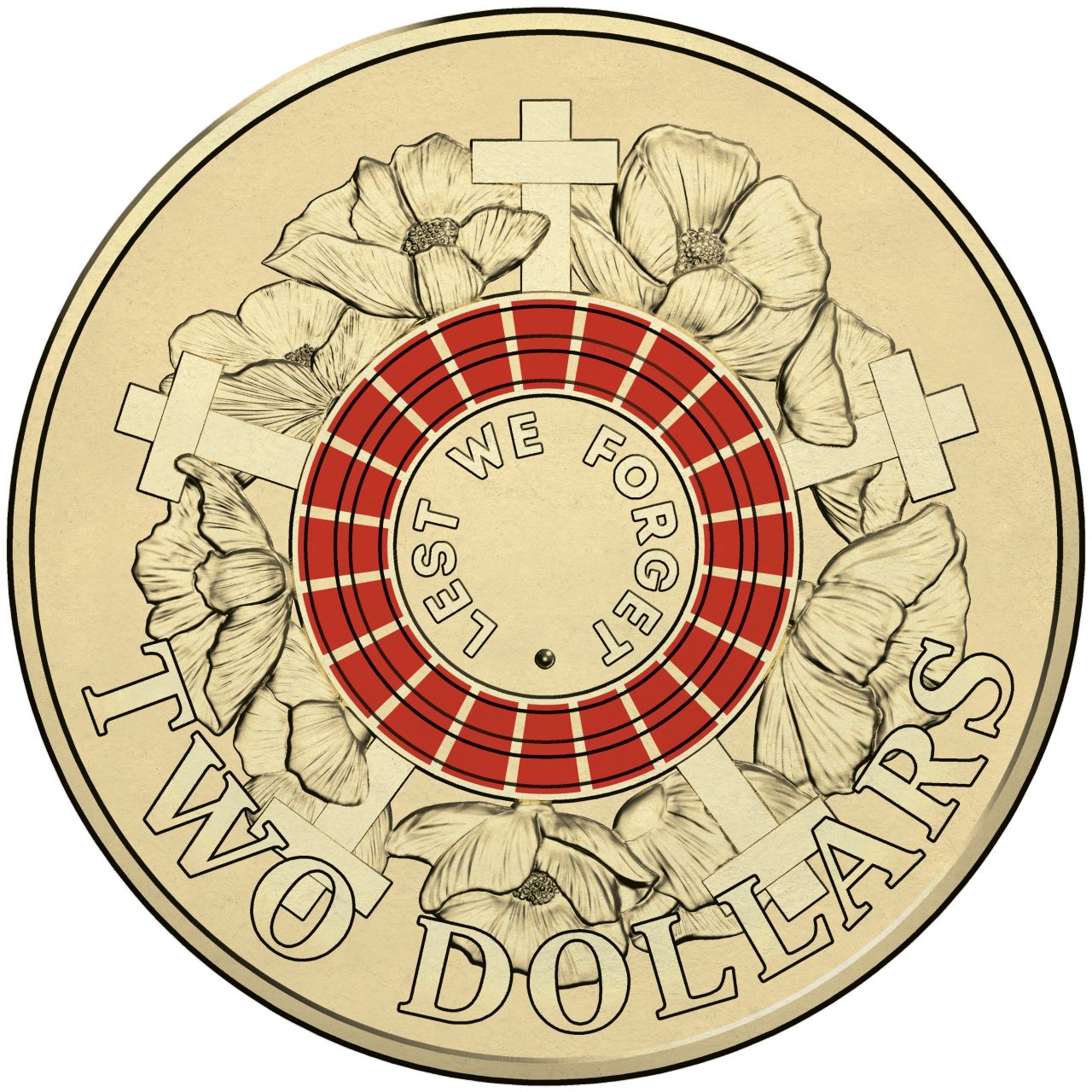
I feel collectors are moving more towards collecting the $2 coin with the various coloured designs, these have been issued into circulation and are certainly bringing new collectors to the hobby. Collecting the dollar coin has has become too much of a chore and is no longer a fun thing to do. Perhaps a coloured dollar into circulation should be next on the to-do list for the RAM.

Posted in Collecting Coins

South Australian Stamp Duty Die 1 1/2d 1939-1953

1 1/2d Stamp Duty Die -South Australia 1939-1953

1 1/2d Stamp Duty Die -South Australia 1939-1953

The South Australian government collected stamp duty on cheques from 1886 to 2004 and during that time both adhesive and embossing stamps were used to determine when that duty had been paid. The stamp duty rate was increased to 1 1/2 pence from January 16th 1939 and the cheque shown below would have been among the first cheques embossed by this die.

The Bank of Australasia Cheque, Murray Bridge South Australia March 29th 1939

The Bank of Australasia Cheque, Murray Bridge South Australia 1939

The rate was increased again in 1953 so the cheque below dated 1950 was embossed during those final years.

The English Scottish & Australian Bank Limited Cheque, Clare, SA, 1950

The English Scottish & Australian Bank Limited Cheque, Clare, SA, 1950

The cheque embossing dies, of which there would only have been two pairs (of male and female) were held in the SA Stamp Duties office. Below is one of those male dies.

sa-stamp-duty

Click image to enlarge

stamp-duty-die-closeup

From left Closeup of Embossed Cheques Dated 1939, 1950 and 1941

Posted in Collectables and Ephemera

Site Search

Sponsors

Upcoming Coin Collecting Events:

no event

Australian Numismatic Calendar

Current Coin Values, Bullion Prices and Exchange Rates

AUD $29.73
Australian 1966 Round 50c
AUD $1,482.99
Gold Sovereign
AUD $1,856.50
Australian $200 Gold Coin
AUD $87.04
Silver Price (per Oz)
AUD $6,299.32
Gold Price (per Oz)
USD $0.6642
Australian Dollar

 
These values are updated hourly using New York market prices. Coin values are purely the value of the gold or silver they contain and do not account for any numismatic value.
Prices Last Updated: 06:04 10 Dec 2025

Subscribe via Email

Enter your email address to subscribe to the Australian Coin Collecting Blog and receive emails about new posts.

Archives